

Pest Library
German Cockroach
The German cockroach is the small, tan indoor cockroach with two dark stripes behind its head, and it is the species that breeds inside kitchens and bathrooms rather than wandering in from outdoors. It is the most persistent structural cockroach in the United States because it reproduces quickly and lives in tight harborage near food, warmth and moisture.
Profile
- Scientific name
- Blattella germanica
- Identification
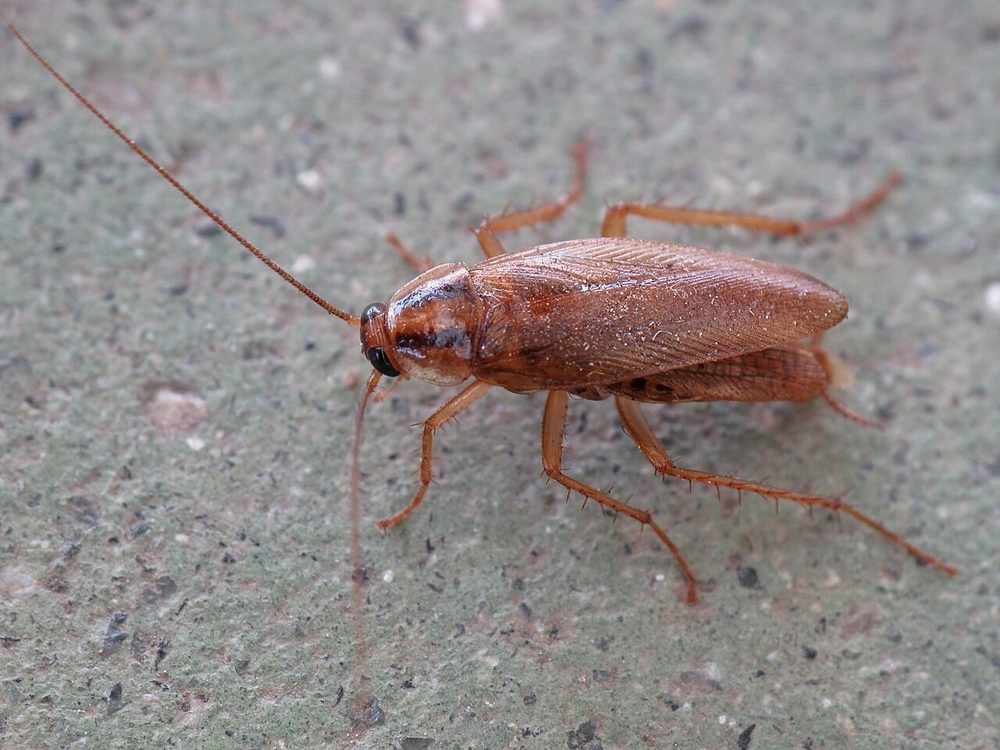
- Two parallel dark stripes run lengthwise on the shield behind the head. Adults are light brown to tan; nymphs are darker with a pale stripe down the back. Adults have fully developed wings but rarely fly.
- Appearance
- Flattened, oval body with long antennae and spined legs adapted for running along tight surfaces.
- Typical size
- Adults about 1/2 inch (13-16 mm) long.
- Behavior
- Nocturnal and thigmotactic — it prefers being wedged in narrow cracks. Populations cluster near food and water and spread outward as harborage fills. Egg cases are carried by the female until shortly before hatching, which improves survival compared with other cockroach species.
- Habitat
- Kitchens, bathrooms, break rooms and equipment voids: appliance motors, cabinet corners, hinges, drawer runners, sink cabinets, and warm electronics.
- Diet
- Omnivorous scavenger — starches, sugars, grease, protein and organic residue.
- Lifecycle
- Egg case (roughly 30-40 eggs) to nymph to adult, with development commonly completing in 6-12 weeks under warm indoor conditions. Continuous indoor reproduction means populations grow year-round.
- Why it matters
- German cockroaches contaminate food-contact surfaces and are a recognized source of allergens associated with asthma, particularly in multifamily housing. They do not bite or sting.
- DIY considerations
- Aerosol sprays scatter populations deeper into voids and can make later baiting less effective. Over-the-counter baits can help in very light, early situations, but placement volume and location matter more than product choice.
- Professional considerations
- Professional programs are inspection-led: harborage is located, sanitation and moisture conditions are addressed, and baits or non-repellent materials are placed in the voids where the population actually lives. In multi-unit buildings, adjacent units may need inspection depending on the extent of activity.
Signs of activity
- Pepper-like fecal specks in cabinet corners and along drawer runners
- Empty egg cases glued into warm, protected seams
- Live nymphs visible in daylight, which indicates crowding
- A musty odor in heavily infested kitchens
Prevention
- Clean grease and food residue from appliance sides, seams and floor edges
- Fix plumbing leaks and reduce standing water in sinks and drain pans
- Store food in sealed containers and empty trash into a lidded receptacle
- Inspect incoming cardboard, appliances and secondhand furniture before bringing them in
- Reduce clutter that creates protected harborage near kitchens
Sources
Related information
Seeing german cockroach at your property?
Book online or request service through our secure customer portal. Tell us what you are seeing and where the property is located.