

Pest Library
Eastern Subterranean Termite
Eastern subterranean termites are the most widespread wood-destroying insect in Alabama. Colonies live in soil and reach wood through mud tubes, so the signs people find are usually mud tubes on foundation walls, discarded wings on windowsills after a spring swarm, or wood that sounds hollow when tapped.
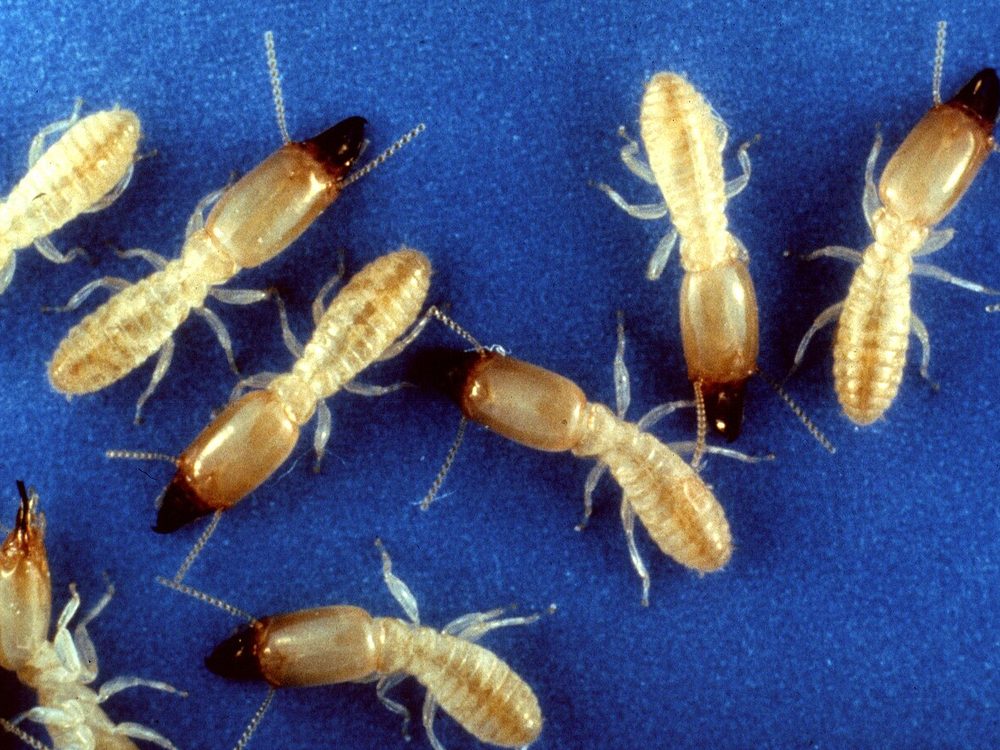
Profile
- Scientific name
- Reticulitermes flavipes
- Identification
- Swarmers are dark with four wings of equal length, a straight-sided waist and straight beadlike antennae. Winged ants instead have a pinched waist, elbowed antennae and front wings longer than the hind wings. Workers are pale, soft-bodied and avoid light.
- Typical size
- Swarmers about 1/4-3/8 inch including wings; workers about 1/8 inch.
- Behavior
- Forages through soil and mud tubes, stays hidden inside wood, and swarms on warm days in spring, often after rain.
- Habitat
- Soil contact wood, sill plates, crawl space framing, porch columns, stumps and buried lumber.
- Diet
- Cellulose — structural wood, paper, cardboard.
- Lifecycle
- Large perennial colonies with workers, soldiers and reproductives; colonies persist for years.
- Why it matters
- Subterranean termites cause cumulative structural damage that typically develops out of sight. Suspected activity warrants prompt evaluation by a company licensed for termite work.
- DIY considerations
- Retail products do not resolve a subterranean termite colony, and disturbing tubes only hides the activity. Preserve any evidence — including swarmers and wings — so a licensed inspector can confirm what you have.
- Professional considerations
- Bed Bugs & Beyond does not offer termite or other wood-destroying insect treatment, inspections or reports. This profile is identification information only. For treatment or a real estate inspection report, contact a company licensed for wood-destroying organism work in Alabama.
Signs of activity
- Mud tubes on foundation walls, piers or crawl space framing
- Discarded wings on windowsills, in bathtubs or near light fixtures after a swarm
- Wood that sounds hollow or gives way under light pressure
- Blistered or rippled paint and trim over soft wood
- Mud-packed galleries running with the wood grain
Prevention
- Keep soil and mulch below siding and away from wood
- Correct plumbing and roof leaks and improve crawl space ventilation
- Remove buried lumber, stumps and cellulose debris near the foundation
- Keep gutters and downspouts directing water away from the foundation
- Maintain a visible inspection gap between soil and any wood
Sources
Related information
Seeing eastern subterranean termite at your property?
Book online or request service through our secure customer portal. Tell us what you are seeing and where the property is located.