

Pest Library
American Dog Tick
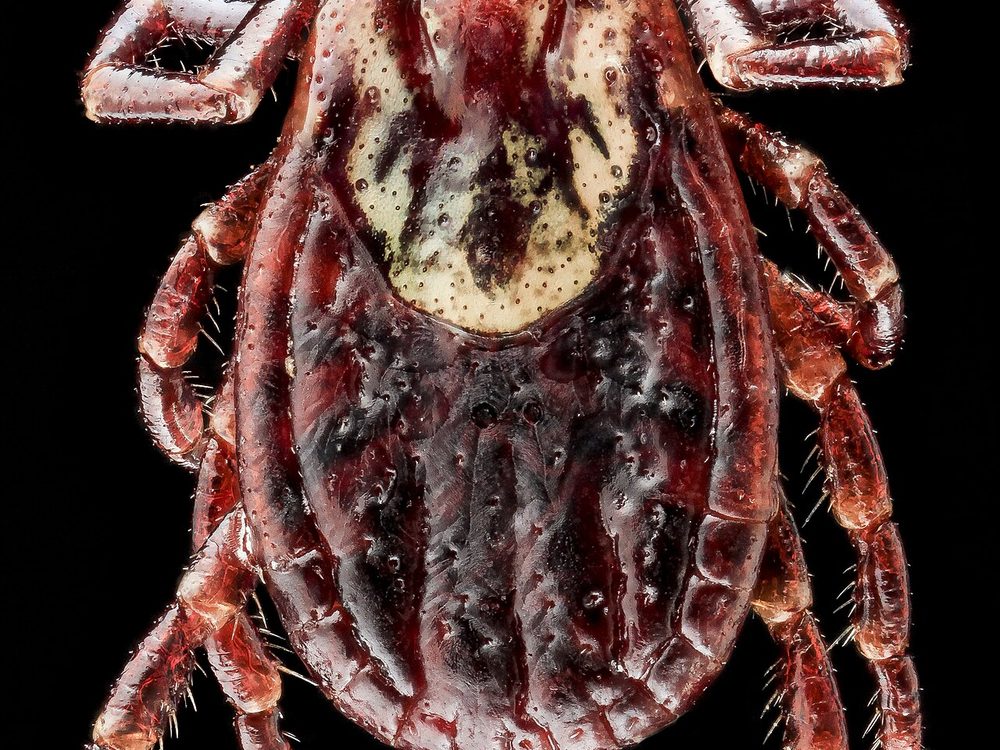
The American dog tick is a medium-large brown tick with pale mottled markings on its shield, most often picked up by dogs and people moving through tall grass, brush lines and trail edges. Yard structure — grass height, brush, leaf litter, wildlife pressure — drives how much tick contact happens on a property.
Profile
- Scientific name
- Dermacentor variabilis
- Identification
- Brown with whitish-gray marbling on the scutum; unfed adults are flat and oval.
- Typical size
- Unfed adults about 3/16 inch (5 mm); engorged females much larger.
- Behavior
- Waits on vegetation with front legs extended to grab a passing host, a behavior called questing.
- Habitat
- Grassy field edges, brush, trail margins and unmowed lot lines.
- Diet
- Blood of mammals, including dogs and people.
- Lifecycle
- Egg, larva, nymph, adult, with a blood meal at each active stage; activity peaks in spring and early summer.
- Why it matters
- Ticks can transmit disease. Remove attached ticks promptly with fine-tipped tweezers, pulling straight out, and contact a healthcare provider or veterinarian about symptoms or bite concerns rather than relying on a website.
- DIY considerations
- Broad yard spraying without habitat reduction gives short-lived results; mowing and edge clearing do a lot of the work.
- Professional considerations
- Service targets tick habitat zones and property edges rather than open turf, on timing tied to seasonal activity.
Signs of activity
- Ticks found on dogs after time in the yard or on trails
- Ticks on clothing after walking through tall grass
- Repeat finds along a specific brushy property edge
Prevention
- Mow regularly and keep grass short near play areas and walkways
- Clear brush and leaf litter along property edges
- Create a mulch or gravel buffer between lawn and wooded areas
- Keep pets on a veterinarian-recommended tick program and check them after outdoor time
- Reduce wildlife harborage such as brush piles and open crawl spaces
Sources
Related information
Seeing american dog tick at your property?
Book online or request service through our secure customer portal. Tell us what you are seeing and where the property is located.