

Pest Library
Acrobat Ant
Acrobat ants get their name from the way they lift a heart-shaped abdomen over the thorax when disturbed. They commonly move into wood or foam insulation that moisture or other insects have already damaged, so finding them indoors is often a clue about a hidden leak.
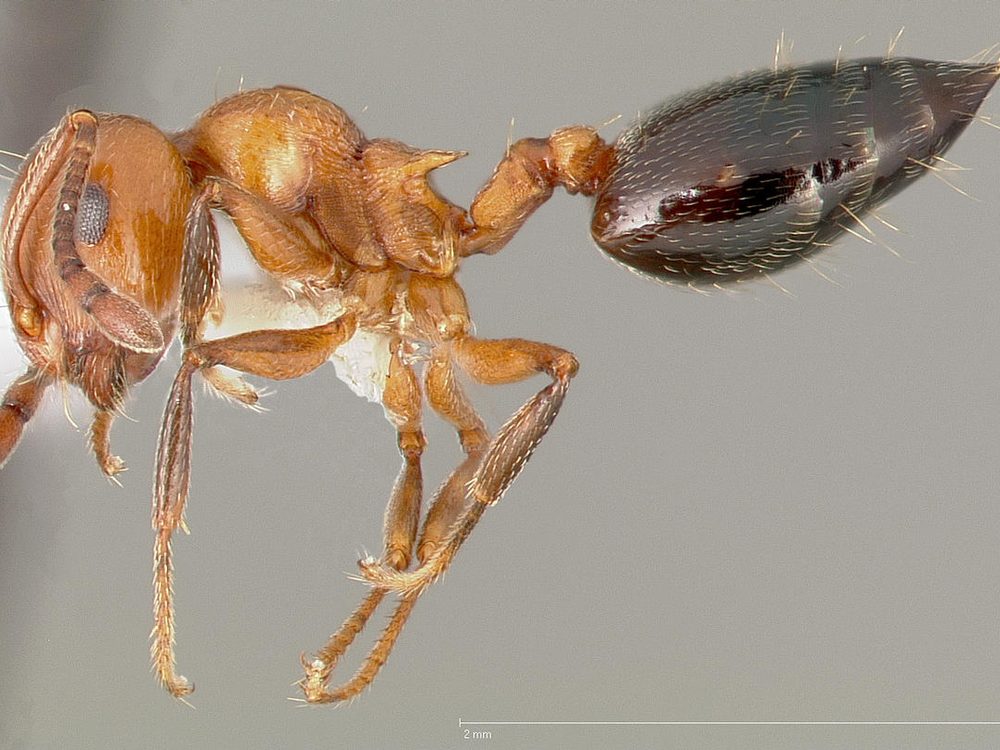
Profile
- Scientific name
- Crematogaster spp.
- Identification
- Small, light brown to nearly black, with a distinctly heart-shaped abdomen held upward when alarmed.
- Typical size
- About 1/8 inch (2.5-4 mm).
- Behavior
- Trails along wires, siding seams and tree limbs; nests in voids and damaged wood.
- Habitat
- Water-damaged framing, foam sheathing, tree limbs, stumps and wall voids.
- Diet
- Honeydew, sweets and insects.
- Lifecycle
- Perennial colonies with seasonal winged flights in warm months.
- Why it matters
- Nesting expands existing damage in already compromised wood or insulation. They can bite and release an unpleasant odor, but are not a health hazard.
- DIY considerations
- Treating the trail leaves the nest intact inside the damaged material.
- Professional considerations
- Service locates the nesting void, treats it directly and documents moisture repairs needed to prevent reinfestation.
Signs of activity
- Small ants trailing along wires, siding joints or window frames
- Ants lifting their abdomens when the trail is disturbed
- Sawdust-like debris or foam shavings near a leak
- Activity concentrated on one wall or roof line
Prevention
- Repair roof and window leaks and replace damaged wood
- Trim branches away from siding and roof lines
- Seal siding and sheathing gaps after repairs
- Keep firewood and lumber off the ground
Sources
Related information
Seeing acrobat ant at your property?
Book online or request service through our secure customer portal. Tell us what you are seeing and where the property is located.